Instructor Highlight: Kyle Reynolds
/Rain City Clay is lucky to be staffed by a group of dedicated ceramicists who work diligently to keep the studio running, who teach with passion and exuberance, and engage and build community through clay. In addition to all that they do at RCC, they also have their own clay practices, either at RCC or off-site, where they make their own work and grow their skills. Each month we will be featuring one of our fantastic staff members and their talents.
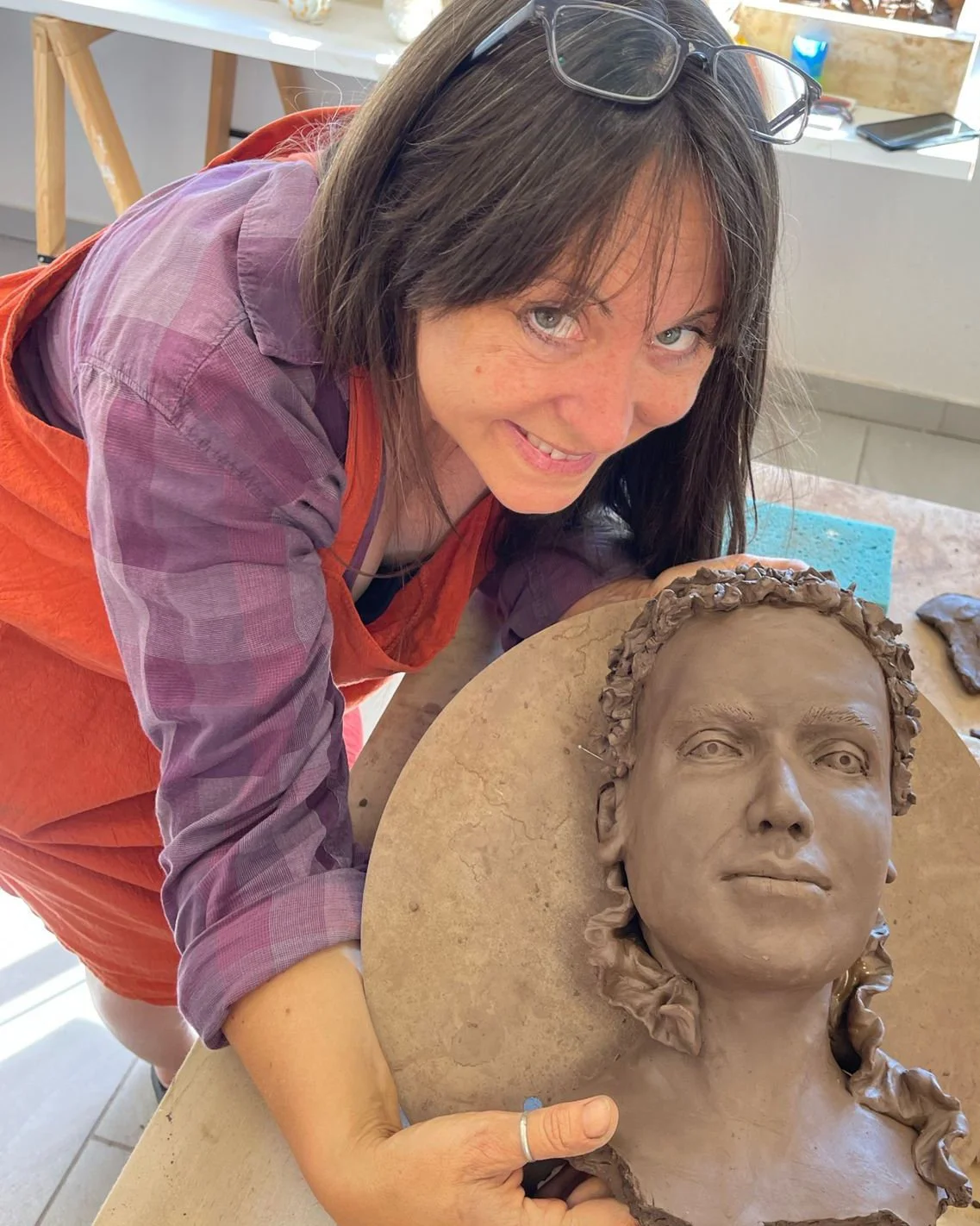
This month we are highlighting instructor Kyle Reynolds (she/her)! Kyle is currently assisting in Irene’s handbuilding class, and will be teaching a sculpture class focusing on paper clay in the Fall 2026 session.
Kyle’s Bio:
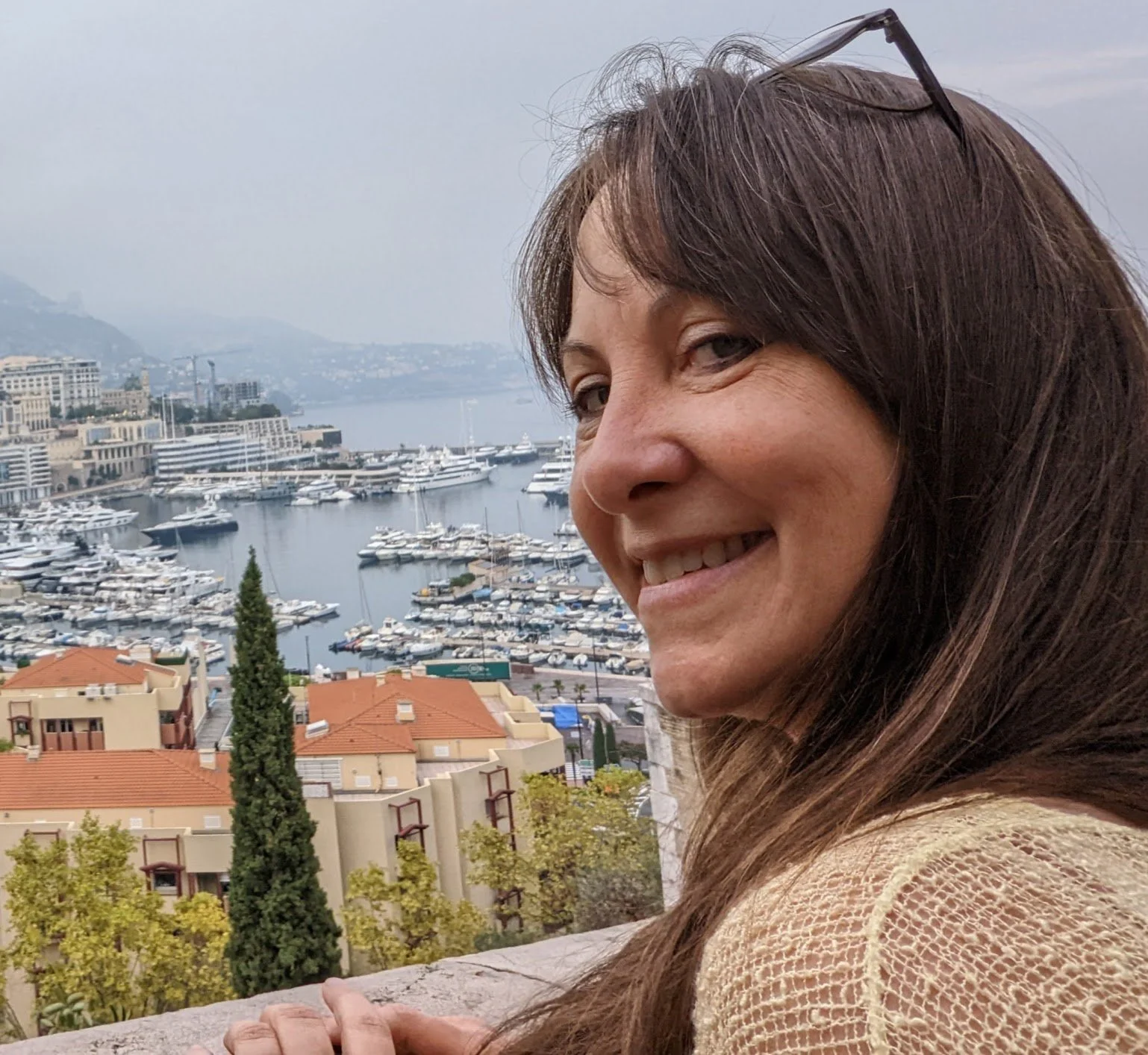
Kyle Reynolds
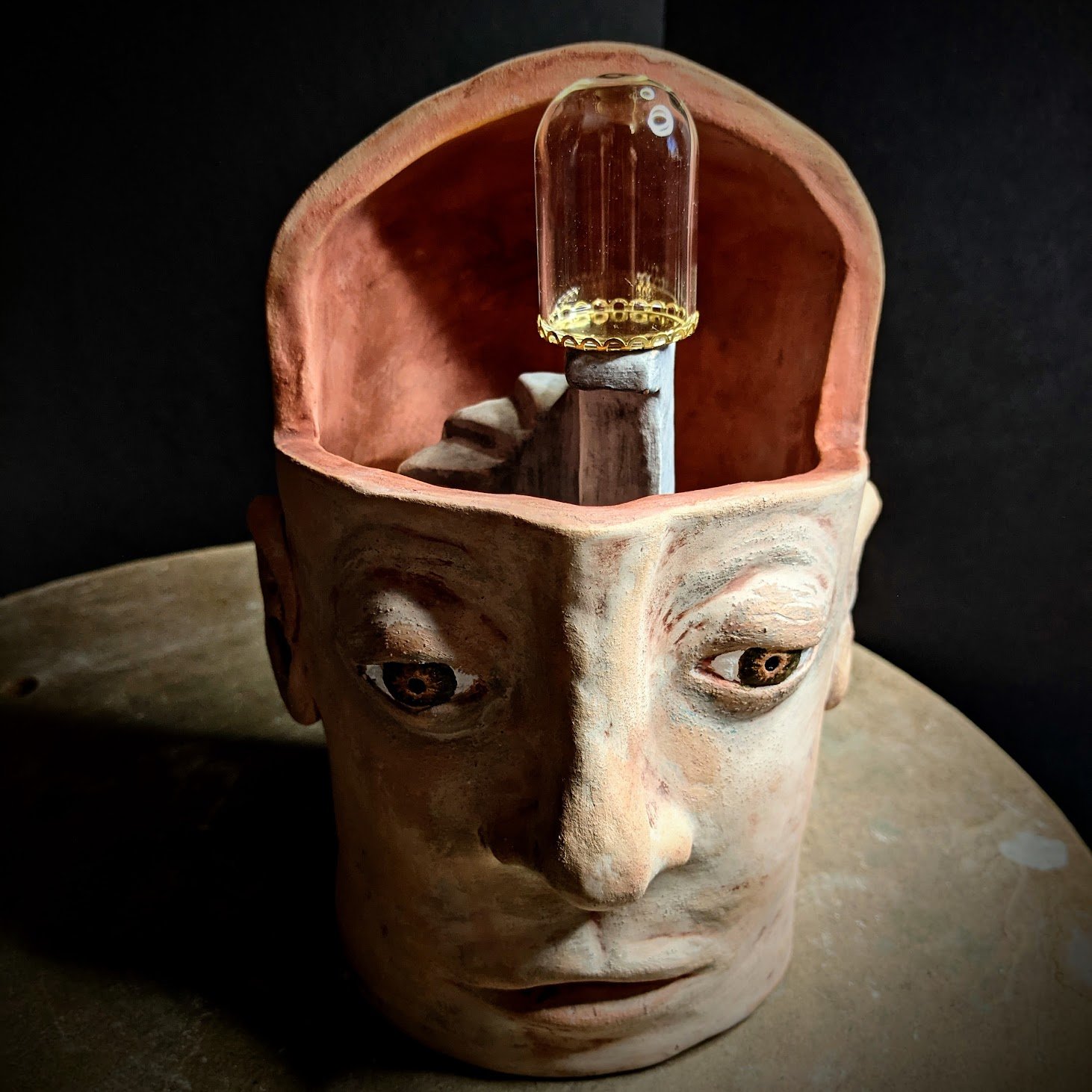
Kyle Reynolds is an emerging Seattle sculptor whose work explores extreme societal shifts, power dynamics, and the fraught relationship between humanity and the natural world. Her hand built ceramic forms, often intricate and surreal, conjure the aesthetic and allegory of contemporary fable. Her work has won awards, been featured in galleries, exhibitions and arts festivals, and acquired in private collections.
She is a member of Washington Clay Arts Association and Pacific Northwest Sculptors Group. Selected for the 2025-2029 Washington State Arts Commission Public Arts Roster, the 2024-2026 Seattle Office of Arts & Culture Public Art Roster, and for a 2025 PLAYA Arts & Sciences awarded residency.
Get to know Kyle!
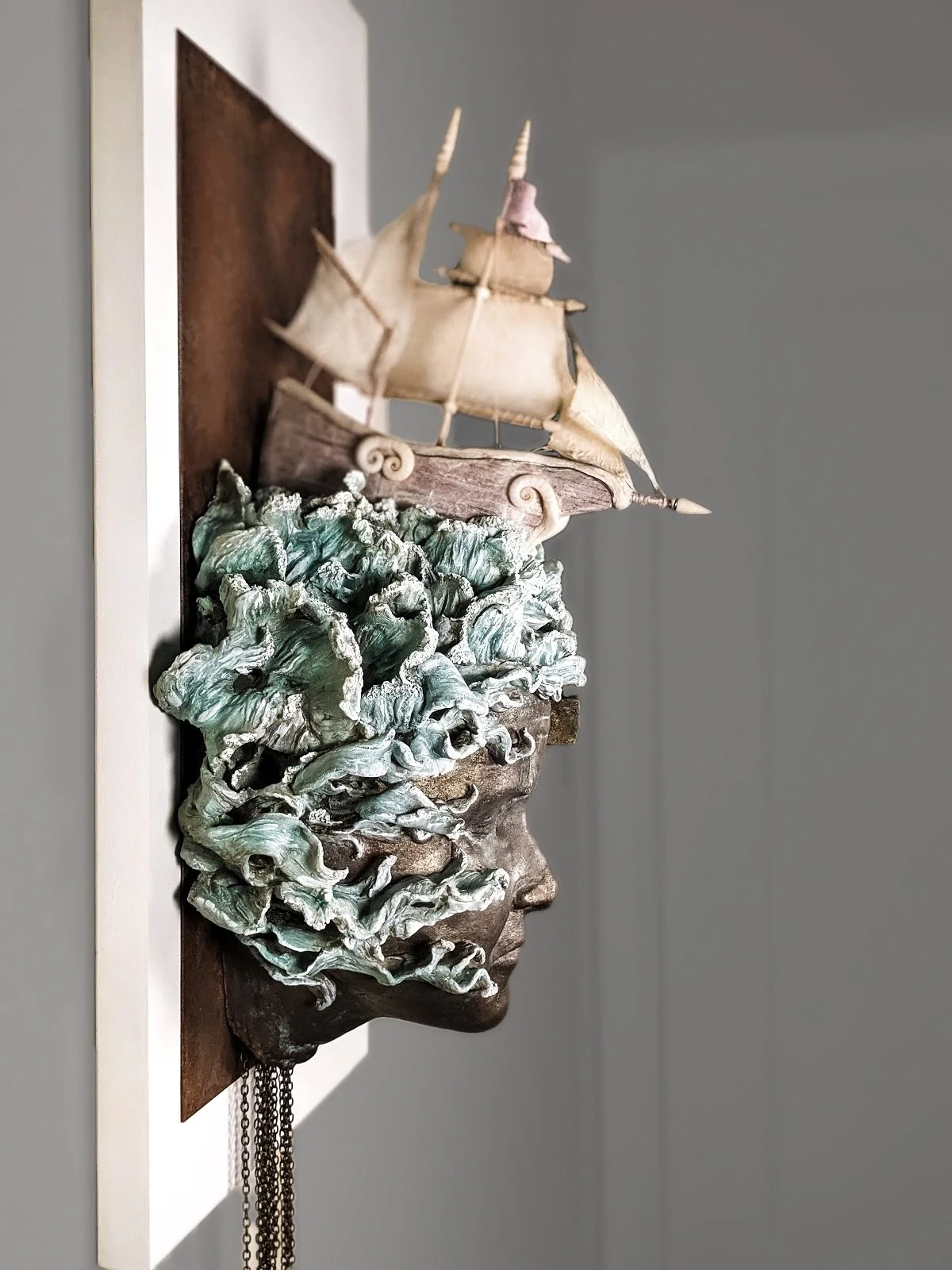
What is your favorite part of the clay process?
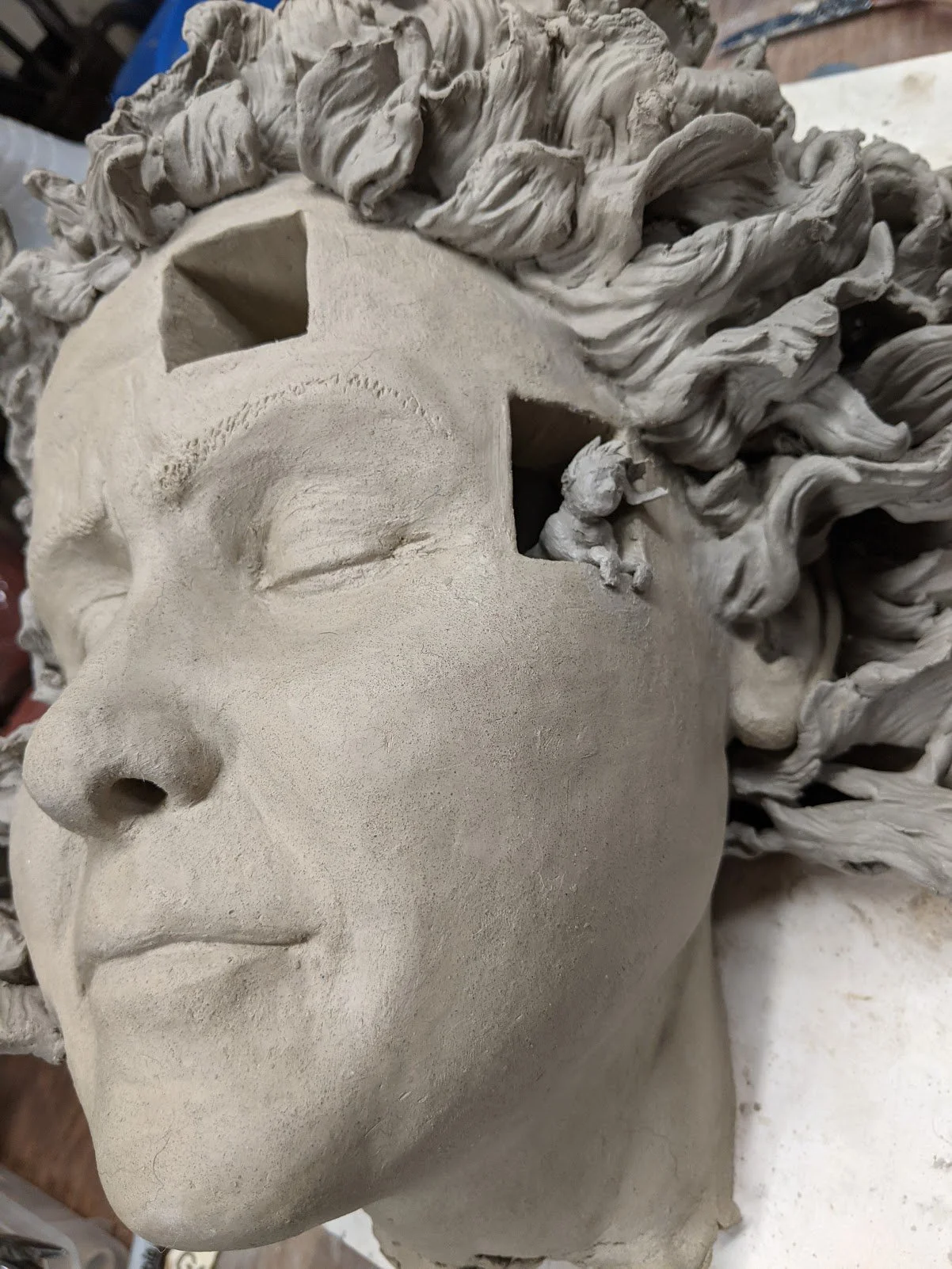
Details! I get excited when the clay is in the perfect leather-hard state and I can start forming and honing all those luscious details. Once a piece is fired, the finishing details are their own brand of magic. And I’d hesitate to even take much credit for the details I sculpt or paint, because it often seems more a product of tool, medium, and clay body. I love experimenting along those lines.
What are your inspirations / influences when making work?
My inspirations and the resulting works are always a surprise to me. I may start out sculpting a simple animal, plant or human but then, inevitably, the inspirational seed of a story is revealed and I stand back, watching it grow into a full-blown conversation. Once I’ve learned a work’s story my challenge becomes figuring out how to communicate it in an exciting new way. The best stories for me are full of magic, wonder, twists and turns - the kind that leave you in a state of awe with your heart beating out of your chest. I’m not sure I’ve accomplished that yet, but it’s always the goal. I imagine the viewer walking inside of the worlds I create, discovering new details like breadcrumbs on a path.
What are you looking forward to about teaching at RCC?
Confession: I am an art workshop junkie. I geek out over learning new techniques, gaining skills, and seeing how different artists approach and solve different problems. I’m looking forward to sharing this passion and watching the sparks of creative energy and inspiration that ensue.
What valuable lessons have you learned along your artistic journey that you wish you knew when you first began?
I wish I’d learned much earlier to trust my own validity as an artist. I still need to learn that, over and over on a daily basis - not to feed my ego, but to simply keep going. We tend to all be so hard on ourselves that we stand in our own way. I often wonder how much beauty we miss out on in the process.
If you had to pick one piece of yours to represent your artistic style, which would it be, and what makes it special to you?
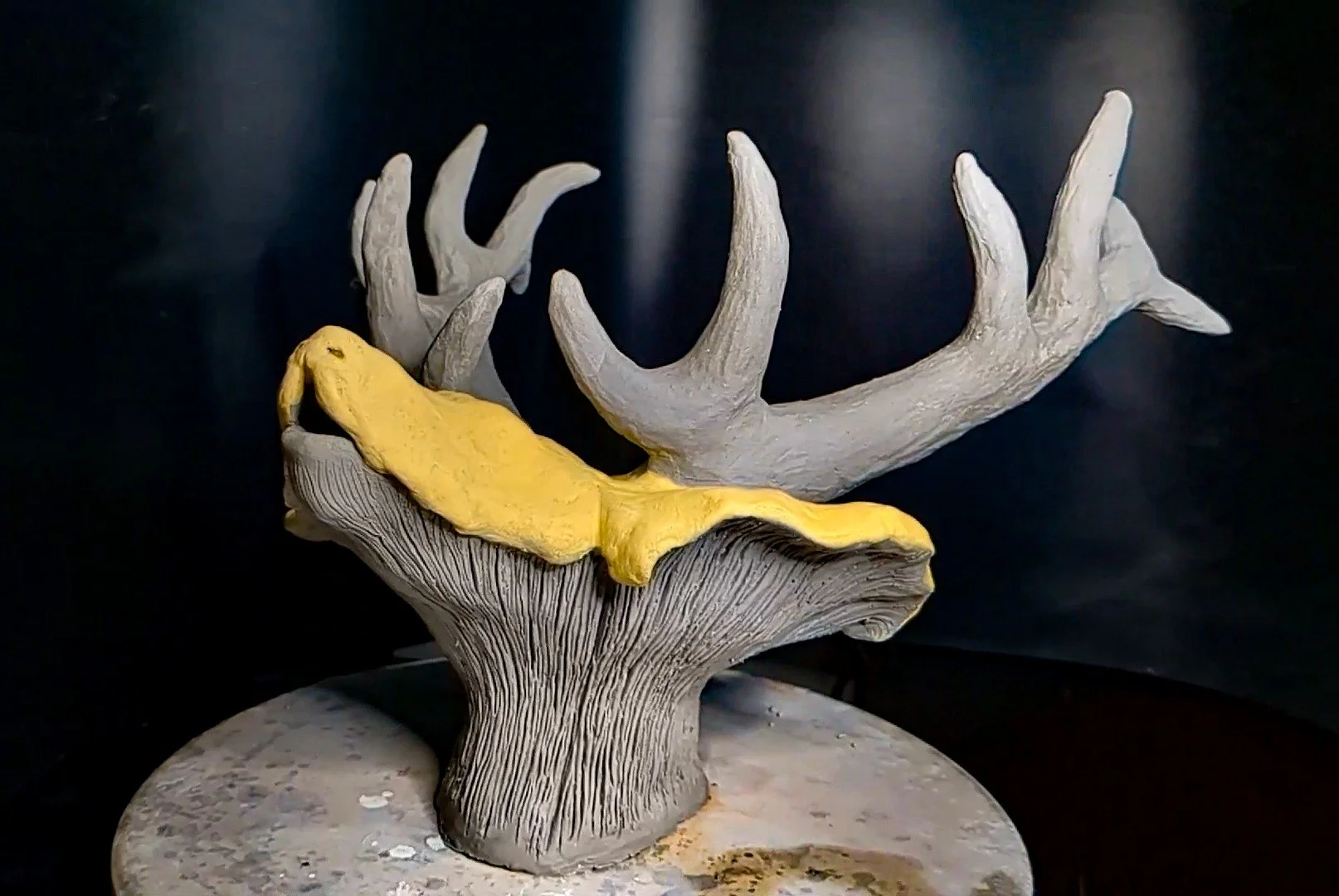
“Let Us Prey” is the piece I’d say is most special to me. Partly because it was a technical and design challenge I felt proud of achieving, and partly because it physically embodies so much emotion I was feeling at the time I sculpted it. It represents the way in which I like to communicate - through a storybook lens of twisted, surreal allegory hidden in a fairytale aesthetic, with layers of dimensional details and surprises that reveal themselves as you walk around the piece.
I finished the final details on that piece just hours before dropping it off for an art fair. When I came back on opening day it had already sold and I felt my heart stop. It wasn’t until that moment that I realized there can be better strategies than making/selling/making/selling. It taught me the valuable lesson of learning to assess my work and to plan it out as a body, not always as individual, standalone pieces. Let the works build, breathe, communicate... and sell no piece before its time.
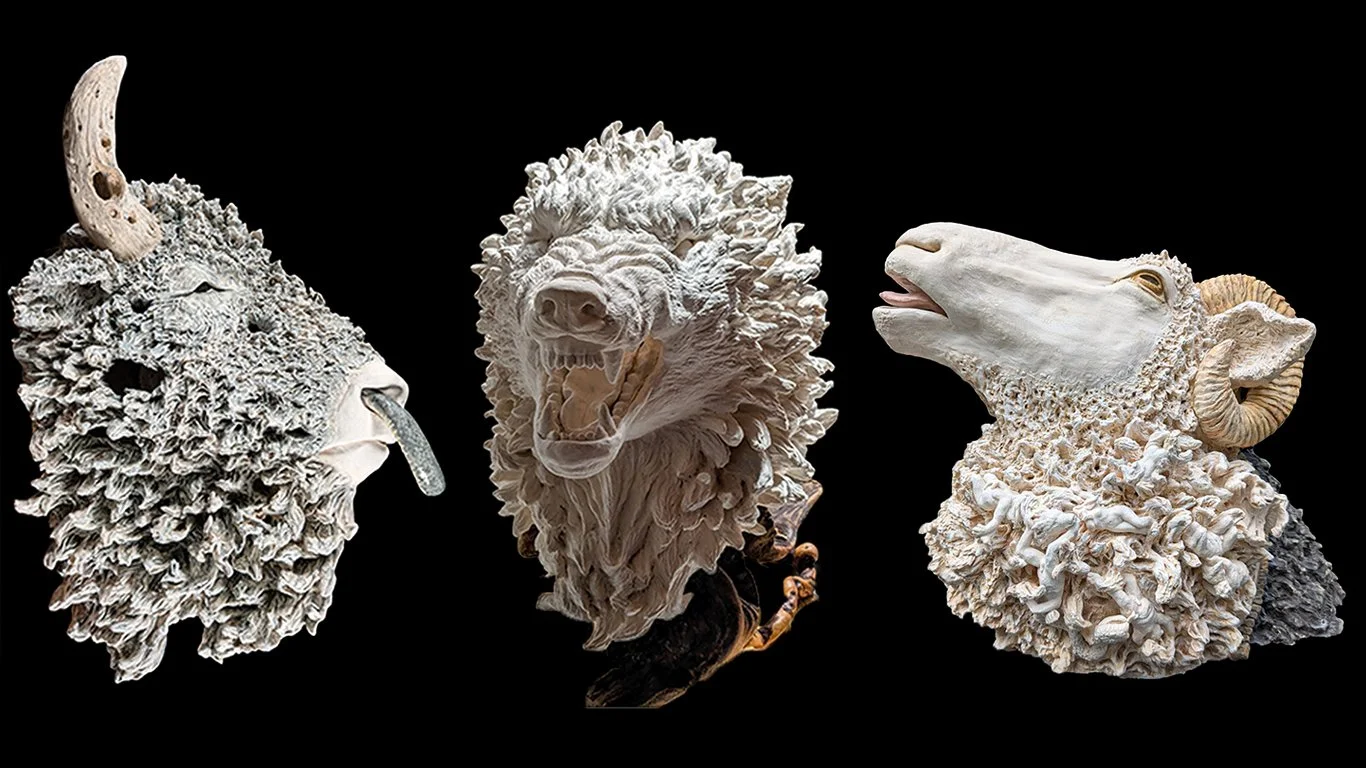
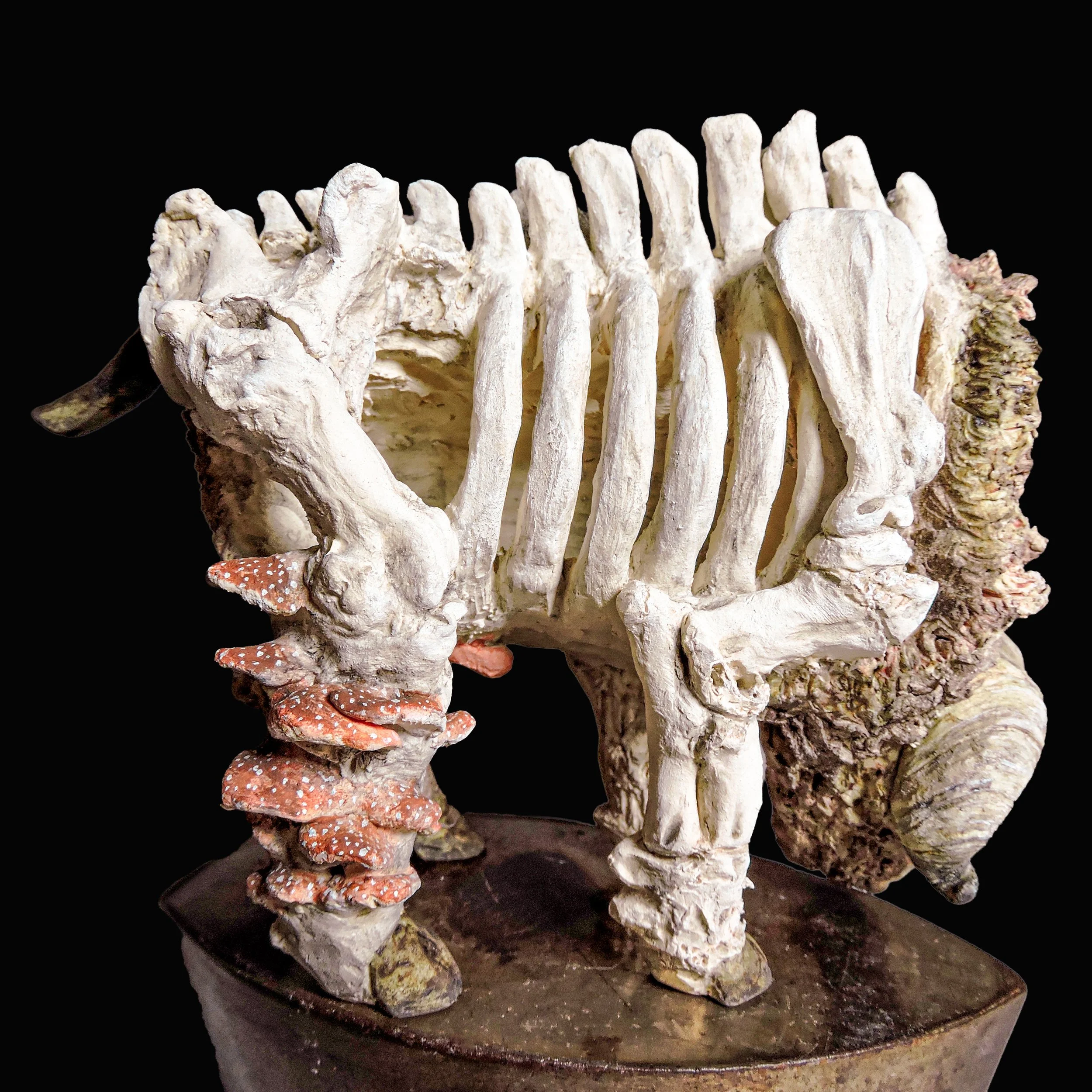
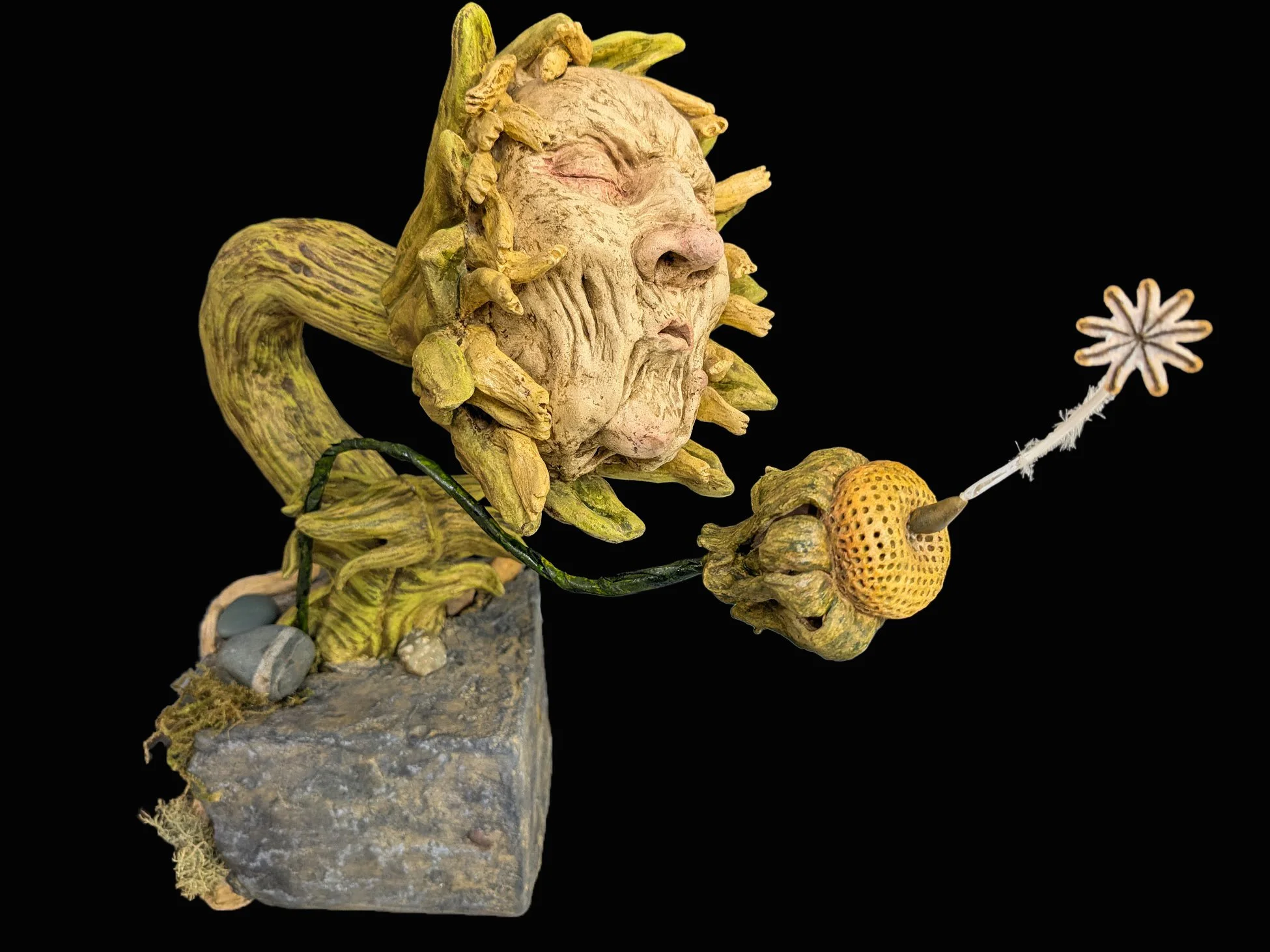
From left to right: “the Vanishing, Act II”, “Let Us Prey”, “Beware of the Dog”
Is there something you’ve wanted to try making that you’ve never made before or haven’t made in a long time?
I’m ready to scale up. So far my work has been limited to what I can fit in my home studio kiln, but I’m ready to go big. To make a body of work meant for a specific installation - works in conversation with one another. My goal is to be able to one day walk around in a three-dimensional world of my own imagination!
What advice would you give to yourself 10 years ago?
My advice to myself from Day 1 would be to listen to my heart, believe what it’s telling me, and do what it says! Since I was an itty bitty kid, I’ve known I was an artist, but some part of me was too stubborn to validate that as ‘practical’. I became a career scientist instead, and while I don’t regret that choice and the adventure-filled life it led to, I’ll never stop wondering how far I could’ve taken my art practice by now. So it’s up to middle-aged me to make up for lost time! It’s like I got a do-over on life, and for that I am eternally grateful.